
Assessment & Measurement Tools
Showing all 5 results
Jump to: Who It's For | How to Choose | Conditions | Compare | FAQs
Assessment and measurement tools help clinicians evaluate range of motion, grip strength, joint function, posture, and physical progress with more accuracy. This category includes goniometers, dynamometers, and other rehab assessment devices used in physiotherapy, sports medicine, orthopedics, and clinical screening.


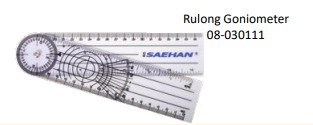

Assessment and measurement tools are essential for clinicians who need objective data during patient evaluation, treatment planning, and progress reviews. From goniometers used to measure joint range of motion to dynamometers used for grip and strength testing, these tools help physiotherapists, sports medicine professionals, rehabilitation teams, and orthopedic practitioners document function with greater accuracy and consistency.
A strong assessment process improves clinical reasoning, supports baseline testing, and makes it easier to track recovery after injury, surgery, immobilization, or performance-related strain. Whether you are measuring mobility, strength, symmetry, or functional change over time, the right assessment tools help turn observation into measurable evidence.
Who It's For
Assessment and measurement tools are used by physiotherapists, occupational therapists, sports therapists, chiropractors, orthopedic clinics, rehabilitation centers, hospitals, home care professionals, and university training programs. They are also useful for clinicians managing post-operative rehab, return-to-sport testing, ergonomic screening, hand therapy, neurological rehab, and musculoskeletal evaluations.
These products are especially relevant for teams that need to measure range of motion, grip strength, pinch strength, joint stiffness, muscle performance, or progress across repeated treatment sessions. In busy clinics, they also improve documentation quality and help standardize assessment from one practitioner to another.
How to Choose
Start by matching the tool to the type of outcome you need to measure. If your goal is to assess joint angles and mobility, a goniometer is usually the first choice. If you need to quantify grip or muscle force, a hand dynamometer or related strength testing device is more appropriate. For clinics dealing with upper limb rehabilitation, hand therapy, sports injuries, or return-to-function protocols, choosing tools that provide repeatable measurements is especially important.
Consider whether you need simple manual tools for fast daily assessments or more specialized devices for detailed tracking. Analog tools are often practical, durable, and cost-effective, while digital options may be better when precision, repeated testing, or reporting is a priority. Also look at ease of cleaning, portability, measurement range, patient population, and whether the device suits routine screening or more formal outcome tracking.
What Conditions does this product range solve
Assessment and measurement tools do not treat the condition directly, but they help clinicians evaluate the severity of dysfunction, choose the right intervention, and measure recovery over time. They are commonly used in cases involving joint restriction, muscle weakness, post-surgical recovery, tendon injuries, ligament injuries, hand and wrist dysfunction, sports trauma, chronic pain presentations, neurological weakness, and functional loss after immobilization.
They are particularly useful for monitoring conditions such as shoulder stiffness, ACL rehabilitation, ankle sprains, tennis elbow, wrist injuries, hand weakness, post-fracture limitation, arthritis-related motion loss, rotator cuff dysfunction, and post-operative recovery where objective measurements support better treatment planning.
Compare product vs product
Goniometer vs Inclinometer: A goniometer is commonly used to measure joint angles such as knee flexion, elbow extension, or shoulder abduction. An inclinometer may be more suitable when measuring spinal angles or movements where gravity-based readings are useful.
Hand Dynamometer vs Pinch Gauge: A hand dynamometer is designed to measure overall grip strength, making it ideal for general hand function testing and rehab progress checks. A pinch gauge is better for measuring specific pinch patterns used in hand therapy, fine motor rehab, and post-surgical hand assessment.
Manual Muscle Testing vs Measured Strength Testing: Manual muscle testing is quick and practical, but a dynamometer provides more objective and trackable data. Clinics that want stronger documentation and clearer progress comparisons often benefit from measured strength testing tools.
Analog vs Digital Assessment Devices: Analog tools are reliable, simple, and often easier to deploy across multiple treatment rooms. Digital tools may be preferable for clinics that prioritize precision, repeated benchmarking, or outcome-based reporting.
FAQs
What is a goniometer used for?
A goniometer is used to measure joint angles and range of motion. It helps clinicians assess mobility restrictions and track improvement during rehabilitation.
What is a dynamometer used for?
A dynamometer is used to measure force, commonly grip strength or muscle strength. It is useful for baseline testing, rehab progress monitoring, and return-to-function assessment.
Who uses assessment and measurement tools?
These tools are commonly used by physiotherapists, occupational therapists, sports medicine practitioners, orthopedic teams, chiropractors, and rehabilitation clinics.
Are these tools only for rehabilitation clinics?
No. They are also used in hospitals, outpatient clinics, sports performance settings, academic training environments, workplace assessments, and some home care situations.
Why are objective measurements important in rehab?
Objective measurements make it easier to document baseline function, justify treatment decisions, monitor progress, and compare outcomes across visits more reliably than observation alone.