
Goniometers & Range of Motion Tools
Showing all 2 results
Jump to: Who It's For | How to Choose | Conditions | Compare | FAQs
Shop goniometers and range of motion tools used to measure joint angles, mobility restrictions, and rehabilitation progress. Ideal for physiotherapy clinics, sports medicine, orthopedics, and clinical assessment.


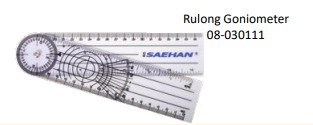
Goniometers and range of motion tools are essential for measuring joint angles, tracking mobility restrictions, and documenting rehabilitation progress. Used across physiotherapy, sports medicine, orthopedics, occupational therapy, and general clinical practice, these tools help practitioners assess baseline movement, monitor recovery, and support treatment decisions with measurable data.
Whether you are assessing knee flexion after surgery, shoulder abduction in sports rehab, wrist mobility after injury, or finger joint movement in hand therapy, the right range of motion tool improves consistency, accuracy, and clinical confidence. Our range includes practical options for daily clinic use, from standard universal goniometers to more specialized ROM measurement tools for smaller joints and targeted assessments.
Who It's For
This category is designed for physiotherapists, occupational therapists, sports medicine clinics, orthopedic practices, chiropractors, rehabilitation centers, hospitals, and educational institutions. Goniometers are also useful for student training, musculoskeletal screening, post-operative follow-up, disability assessment, and documenting improvements in movement over the course of treatment.
Clinicians who regularly assess joints such as the shoulder, knee, hip, elbow, wrist, ankle, and fingers benefit from reliable range of motion tools that are easy to position, read, clean, and store. These tools are particularly valuable in practices where outcome measures and progress tracking are a routine part of patient documentation.
How to Choose
When choosing a goniometer or ROM tool, start with the joints you assess most often. Standard universal goniometers are suitable for general use and work well for major joints such as the knee, elbow, shoulder, and ankle. Smaller or more specialized tools may be better for finger, hand, or wrist assessments where precision in tight spaces matters more.
Material is another key factor. Plastic goniometers are lightweight, affordable, and easy to keep on hand in busy clinics. Metal goniometers may offer greater durability for frequent long-term use. Also consider arm length, ease of reading the scale, portability, and whether your team prefers shorter tools for compact handling or longer arms for larger joints and clearer alignment with anatomical landmarks.
What Conditions does this product range solve
Goniometers and ROM tools help clinicians assess and monitor limitations associated with musculoskeletal injuries, post-surgical stiffness, ligament sprains, tendon injuries, joint contractures, arthritis, neurological conditions, fracture recovery, and overuse injuries. They are especially useful when comparing initial restriction against later functional gains.
These tools do not treat the condition directly, but they solve an important clinical problem: they provide an objective way to measure movement loss and improvement. This supports better diagnosis, more accurate progress notes, clearer patient communication, and stronger evidence for treatment planning, insurance reporting, and return-to-activity decisions.
Compare product vs product
Plastic goniometers vs metal goniometers: Plastic models are lightweight, economical, and ideal for routine clinic use or student practice. Metal models are more durable and may suit high-volume environments where long-term repeated use is expected.
Long-arm vs short-arm goniometers: Long-arm options are often easier to align on larger joints such as the knee or hip, while short-arm models can be more convenient for smaller joints or compact storage.
Universal goniometers vs specialized ROM tools: Universal goniometers handle most general joint assessments well, while more specialized tools are better for finger joints, hand therapy, or use cases requiring more targeted measurement.
General clinic use vs rehab documentation focus: If your priority is quick everyday assessment, a standard easy-read model may be enough. If you need consistent repeat measurements for progress tracking, choose tools with clear scale markings, stable construction, and reliable alignment for repeatable results.
FAQs
What is a goniometer used for?
A goniometer is used to measure joint angles and range of motion. It helps clinicians assess movement restrictions, establish a baseline, and track rehabilitation progress over time.
Which joints can be measured with a goniometer?
Goniometers are commonly used for the shoulder, elbow, wrist, fingers, hip, knee, and ankle. The best model depends on whether you are measuring a large joint or a smaller, more precise area.
Are plastic goniometers accurate enough for clinic use?
Yes, many plastic goniometers are suitable for routine clinical assessment when used correctly. They are popular because they are lightweight, affordable, and easy to keep in treatment rooms.
When should I choose a metal goniometer?
Metal goniometers are a good choice when you want added durability for frequent use or prefer a sturdier feel during repeated measurements.
Why are range of motion tools important in rehab?
They provide an objective way to document improvement or limitation in joint movement. This helps guide treatment planning, supports clinical notes, and makes progress easier to demonstrate to patients and referring professionals.
Can these tools be used in sports medicine?
Yes. Goniometers are widely used in sports medicine to assess mobility after sprains, strains, ligament injuries, surgery, and return-to-play rehabilitation.