
Anatomical Charts & Teaching Aids
Showing all 11 results
Jump to: Who It's For | How to Choose | Conditions | Compare | FAQs
Shop anatomical charts and teaching aids for clinics, physiotherapy rooms, classrooms, and patient education. Explore musculoskeletal, spine, trigger point, shoulder, hand, foot, head, neck, and ear charts designed to make anatomy easier to explain, teach, and reference.




Anatomical charts and teaching aids help clinics, rehabilitation centers, classrooms, and healthcare professionals explain body structures more clearly. This range includes wall charts covering the muscular system, trigger points, the shoulder, spine, hip and knee, head and neck, hand and wrist, foot and ankle, and other key anatomical regions. Whether you are educating patients, training students, or improving consultation-room communication, these anatomy charts provide a practical visual reference that makes complex structures easier to understand.
For physiotherapy clinics, sports medicine settings, hospitals, and educational environments, anatomical charts can improve how anatomy, movement, injury patterns, and pain referral areas are explained. They are especially useful where quick visual guidance supports assessment discussions, rehabilitation planning, and patient confidence.
Who It's For
This category is suitable for healthcare and education environments that need clear anatomical visuals for teaching, explanation, and reference.
- Physiotherapists and rehabilitation clinics that need visual tools for patient explanation and treatment discussions.
- Chiropractic, osteopathy, and sports therapy practices that regularly explain joint mechanics, soft tissue structures, and pain patterns.
- Hospitals, medical centers, and outpatient departments that want accessible visual anatomy references in consultation rooms.
- Universities, colleges, and anatomy classrooms that require teaching aids for musculoskeletal and regional anatomy learning.
- Massage and manual therapy professionals who need trigger point and muscle charts for education and communication.
- Fitness, movement, and corrective exercise professionals who want charts to explain posture, mobility, and body-region function.
How to Choose
The right chart depends on your setting, your audience, and the type of anatomy you need to explain most often.
- Choose by body region: If your work focuses on shoulder, spine, foot and ankle, or hand rehabilitation, select charts that match the areas you explain most during consultations.
- Choose by teaching purpose: For general anatomy teaching, broad charts like the muscular system or vertebral column are useful. For injury discussions, region-specific charts such as shoulder, hip and knee, or spine disorder charts are more practical.
- Choose by patient education need: Trigger point charts and injury-focused charts work well when explaining pain referral patterns, overuse problems, and common musculoskeletal complaints.
- Choose by room use: Consultation rooms often benefit from targeted body-region charts, while classrooms and training rooms usually need broader system-based anatomy charts.
- Choose by visual clarity: Look for charts with clearly labeled structures, easy-to-read layouts, and illustrations that help both clinicians and patients follow the explanation quickly.
What Conditions does this product range solve
Anatomical charts and teaching aids do not directly treat medical conditions. Instead, they support the explanation, education, and communication around common anatomical regions and musculoskeletal concerns.
These charts are useful when discussing topics such as:
- Shoulder pain, impingement, rotator cuff issues, and movement restriction
- Neck pain, tension, posture-related dysfunction, and cervical discomfort
- Back pain, spinal anatomy, vertebral alignment, and common spine disorders
- Hip and knee pain, joint mechanics, and lower-limb rehabilitation planning
- Hand and wrist pain, tendon irritation, overuse, and grip-related dysfunction
- Foot and ankle pain, biomechanics, plantar strain, and mobility issues
- Muscle pain patterns and myofascial trigger point referral discussions
- General anatomy teaching for students, staff, and patients
In practice, these charts help clinicians improve understanding, support consent and education conversations, and make technical anatomy easier to explain in a patient-friendly way.
Compare product vs product
| Chart Type | Best For | Main Focus | Ideal Setting |
|---|---|---|---|
| The Muscular System Chart | General anatomy teaching | Major muscle groups and overall structure | Classrooms, clinics, training rooms |
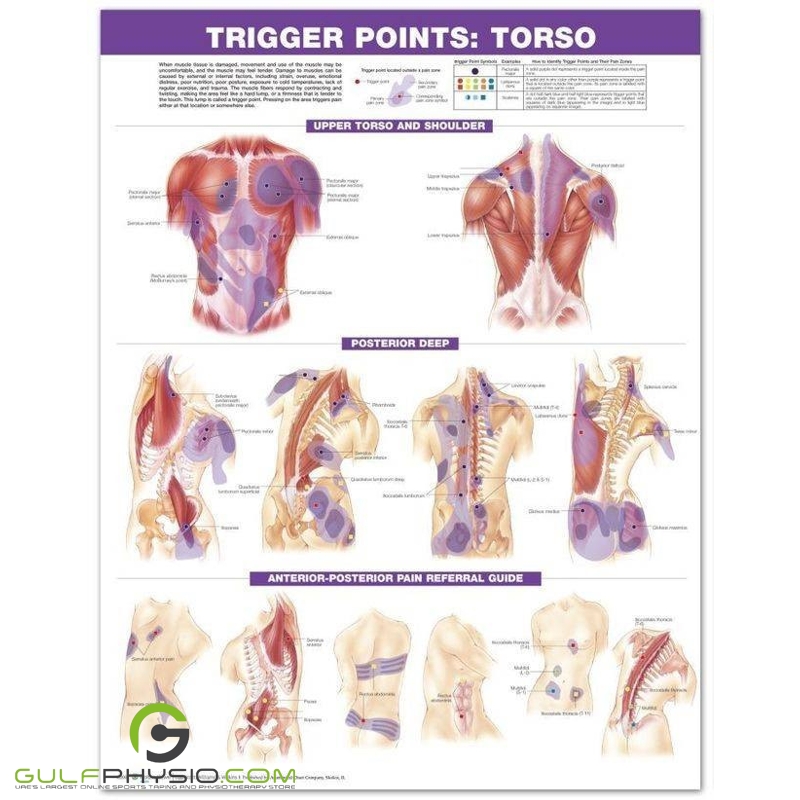
| Trigger Points Chart (Set of 2) | Pain pattern explanation | Trigger points and referred pain areas | Massage, physio, sports therapy clinics |
| Hip and Knee Chart | Lower-limb consultations | Joint anatomy and common discussion points | Rehab clinics, orthopaedic settings |
| Head and Neck Chart | Neck and upper-body education | Regional anatomy of the head and cervical area | Manual therapy and clinical education rooms |
| Understanding The Hand & Wrist Chart | Upper-limb explanation | Hand and wrist anatomy | Hand therapy, rehab, sports medicine |
| Anatomy and Injuries of the Shoulder | Shoulder injury discussions | Anatomy plus common injury concepts | Sports medicine and physiotherapy clinics |
| Understanding The Foot & Ankle Chart | Foot and ankle assessment education | Regional anatomy and movement structures | Podiatry, physio, sports rehab |
| The Shoulder & Elbow Chart | Upper-limb joint explanation | Combined shoulder and elbow anatomy | Orthopaedic and rehab settings |
| The Human Spine: Disorders Chart | Back pain and posture discussions | Spinal conditions and anatomy overview | Chiropractic, physio, consultation rooms |
| Vertebrae Column Chart | Spinal anatomy teaching | Detailed vertebral structure | Classrooms, clinics, anatomy education |
| Human Ear Chart | Regional anatomy education | Ear structure and anatomical reference | General medical teaching environments |
FAQs
What are anatomical charts used for in a clinic?
Anatomical charts are used to support patient education, explain body structures, show injury locations, and improve communication during consultations, assessment discussions, and rehabilitation planning.
Are these charts only for schools and universities?
No. They are also highly useful in physiotherapy clinics, sports medicine facilities, chiropractic practices, hospitals, massage clinics, and rehabilitation centers where visual explanation improves understanding.
Which chart is best for explaining pain referral patterns?
Trigger point charts are especially useful for showing referred pain patterns and muscle-related pain discussions. They are often used in massage therapy, physiotherapy, and sports therapy settings.
Which charts are best for musculoskeletal clinics?
Muscular system, spine, shoulder, shoulder and elbow, hip and knee, hand and wrist, and foot and ankle charts are all highly relevant for musculoskeletal and rehabilitation-focused practices.
Do anatomical charts help treat patients?
They do not treat patients directly. Their role is educational and visual. They help clinicians explain anatomy, injury mechanisms, and rehabilitation concepts more clearly.
Should I choose a full-body chart or a region-specific chart?
Choose a full-body chart for broader teaching and general anatomy reference. Choose a region-specific chart if your clinic regularly treats one area such as the shoulder, spine, hand, foot, or knee.
Are these charts useful for patient education rooms?
Yes. They are particularly effective in consultation rooms and treatment spaces where visual references make anatomy and injury explanations easier for patients to follow.